Dubai’s summer heat isn’t a seasonal inconvenience — it’s a year-round design constraint. With outdoor temperatures regularly crossing 45°C, choosing the right cooling system affects everything from your monthly DEWA bill to your family’s comfort and even the resale value of your property. Among homeowners and property managers across the city, one question comes up more than any other: split vs central AC which one actually makes sense for a Dubai home?
There’s no single right answer. The best choice depends on your property type, budget, and long-term plans. Below, we break down how these two systems compare so you can make an informed decision.
Understanding the Basics: Split vs Central Air Conditioning
Before comparing performance and cost, it helps to understand how each system actually works and where it’s typically used across Dubai homes.
How a Split AC System Works
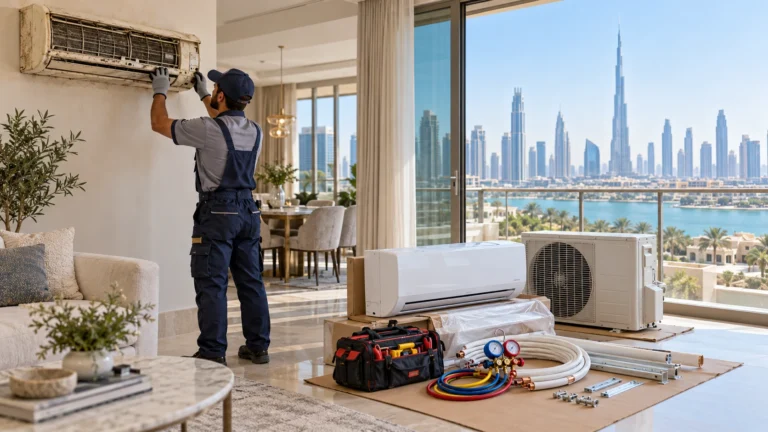
A split AC system consists of two main units an indoor evaporator unit mounted on a wall or ceiling, and an outdoor condenser unit that sits on a balcony, roof, or external wall. Each room typically gets its own indoor unit, allowing independent temperature control room by room.
How a Central AC System Works
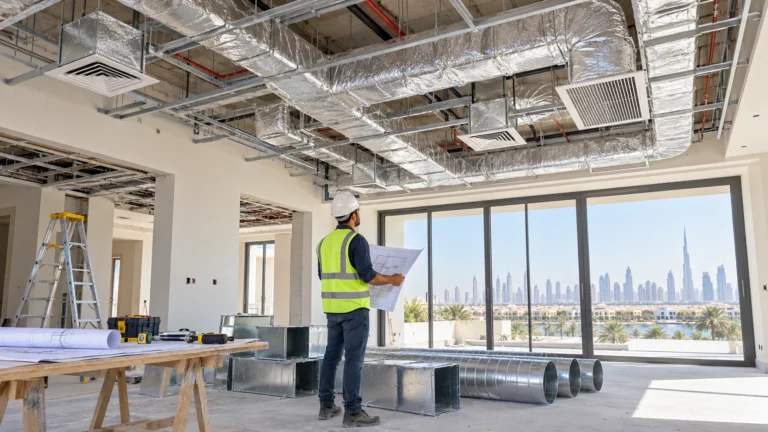
A central AC system, by contrast, uses a single large unit (often installed on the roof or in a dedicated plant room) connected to a network of ducts that distribute cooled air throughout the entire home. Most villas and larger apartments in Dubai, especially those built in established residential communities, come pre-fitted with ducted central systems as standard.
Understanding this distinction is the first step in deciding between central AC or split AC for your specific property.
Cooling Efficiency: Which System Performs Better?
Efficiency is one of the biggest factors homeowners weigh when comparing these two systems, and each has a different strength depending on how the home is used.
The Cooling Efficiency of Split AC
The cooling efficiency of split AC units is one of their biggest selling points. Because each unit cools only the room it’s installed in, you’re not wasting energy cooling empty bedrooms, guest rooms, or storage areas. For apartments, studios, and smaller villas where certain rooms are used only occasionally, this room-by-room control can translate into noticeably lower electricity consumption.
How Central AC Efficiency Compares
Central AC systems, on the other hand, are engineered for whole-home consistency. They maintain a uniform temperature across every room simultaneously, which is difficult to replicate with multiple split units running independently. In larger properties, a well-maintained central system can actually be more efficient overall, since it avoids the energy losses associated with running several smaller compressors at once. The catch is that efficiency depends heavily on ductwork insulation, filter cleanliness, and regular servicing neglected ducts leak cooled air and force the system to work harder.
Cost Considerations: Upfront vs Long-Term
Budget plays a major role in this decision, and the cheaper option upfront isn’t always the cheaper option over time.
Upfront Costs
Split AC units generally cost less to purchase and install initially, making them attractive for smaller renovation budgets or quick upgrades. However, running multiple split units across a large property can add up in both electricity costs and maintenance visits over time, since each indoor and outdoor unit needs individual servicing.
Long-Term Value
Central AC systems require a larger upfront investment, especially when you need to install or replace ductwork.
But for residential AC systems in Dubai operating in villas or large apartments, the long-term cost per square foot of cooled space can be lower, provided the system receives consistent professional maintenance.
Whichever system you invest in, ongoing upkeep is what protects that investment. Scheduling regular AC maintenance services in Dubai helps catch small issues a dirty filter, a low refrigerant level, a loose duct connection before they turn into costly breakdowns or spiking electricity bills.
Best Cooling System for Dubai: Property Type Matters
When people ask about the best cooling system for Dubai, the honest answer is: it depends on what you’re cooling.
Why Apartments Often Suit Split Systems
Apartments and smaller units generally benefit from split systems. Installation is simpler, upfront costs are lower, and tenants or owners can adjust individual rooms without affecting the rest of the unit. This flexibility is especially valuable in Dubai’s rental market, where many residents prefer paying only for the cooling they actually use.
Why Villas Often Suit Central Systems
Villas and townhouses tend to lean toward central systems, and there’s a good reason for this. Ducted AC cooling for villas delivers even temperature distribution across multiple floors and larger floor plans, and it avoids the visual clutter of multiple outdoor condenser units on the building’s exterior. For larger families who want to cool the entire home at once including living areas, bedrooms, and the majlis central AC often provides the more practical solution.
Maintenance: The Deciding Factor Either Way
Regardless of which system you choose, performance and lifespan come down to how well the system is maintained.
Why Dubai’s Climate Demands More Frequent Servicing
Dubai’s dusty conditions, combined with near-constant AC usage, mean filters clog faster, coils accumulate grime sooner, and ducts require more frequent inspection than in milder climates. Skipping maintenance doesn’t just reduce comfort it drives up energy bills and shortens the lifespan of expensive equipment.
The Role of Professional Support
This is where professional support makes a real difference. Reliable AC maintenance services in Dubai including filter cleaning, gas top-ups, duct inspection, and seasonal servicing keep both split and central systems running efficiently through the hottest months. If you’re renovating your home and rethinking your cooling system, MAE Technical Services, a top home renovation company in Dubai, can help you integrate the right AC solution with your home’s layout, insulation, and electrical planning from the start instead of treating it as an afterthought.
Conclusion
There’s no universal winner in the split vs central air conditioning debate only the right system for your specific property. Apartments and smaller homes generally do well with the flexibility and lower upfront cost of split units, while villas and larger residences benefit from the consistent, whole-home comfort of central systems.
Whichever direction you choose, the real differentiator is professional installation and ongoing maintenance. A well-serviced split system can outperform a neglected central one, and vice versa. If you’re planning a new installation, upgrading an existing system, or renovating your home altogether, getting expert guidance early will save you money and discomfort down the line.