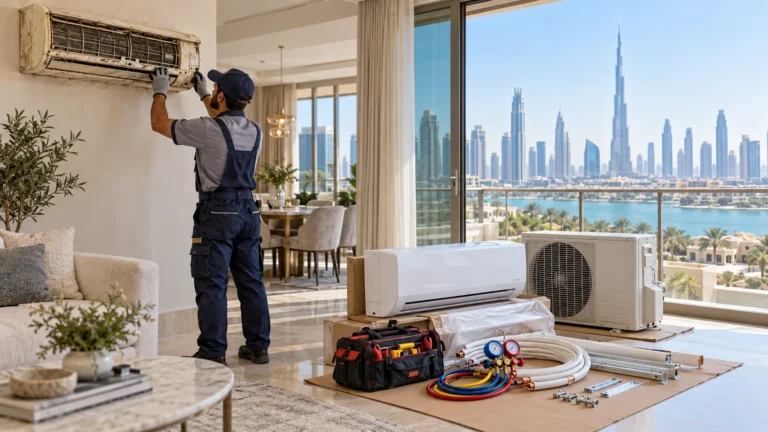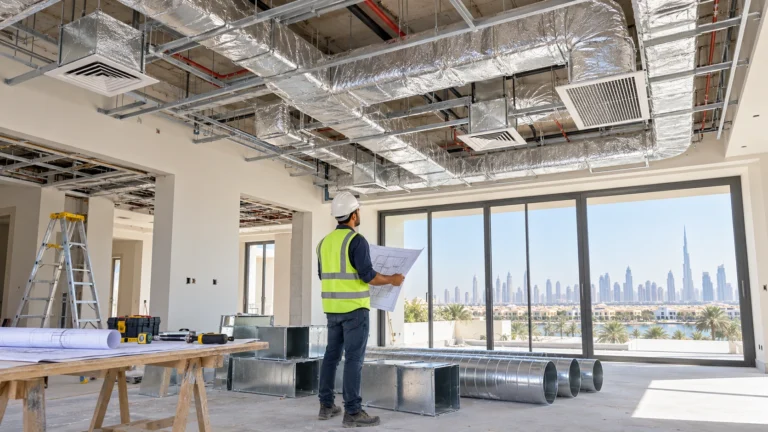
AC duct installation in Dubai is much more involved than many homeowners realize. You may have an excellent air-conditioning unit, have set the thermostat just right, yet the bedroom could still feel like a refrigerator while the other room is suspiciously close to the balcony in July. The issue could be your ductwork that is carrying the conditioned air throughout your home.
A properly designed duct system will help to evenly distribute the conditioned air throughout your villa or apartment and reduce undesired cooling loss thus saving on energy costs. In Dubai, where AC systems are running at full capacity most of the year, getting the duct design and installation correctly is of paramount importance.
What Is AC Duct Installation in Dubai?
AC duct installation in Dubai deals with designing and installing the duct system that will carry and distribute the conditioned air from a central or ducted AC system. These systems comprise supply ducts, return-air systems, plenums, dampers, insulation, diffusers, and grilles. The supply ducts deliver the conditioned air, while the return ducts carry the air back to the air handling equipment.
While these seem like simple systems, duct systems require proper calculations to suit the needs of the room. Duct sizing in terms of width, length, and angle as well as the room’s cooling requirements, and available space in the ceiling for the duct installation are a few of the considerations when installing duct systems. ASHRAE duct design guidelines also emphasize the need to seal ducts, joints, and penetrations to control air leakage.
Why Does Proper AC Duct Installation Matter in Dubai?
Dubai homes place considerable demand on cooling systems. DEWA identifies air conditioning as one of the largest contributors to household electricity use, particularly during summer. That makes inefficient ductwork an expensive place to lose conditioned air.
Poorly connected or leaking ducts can allow some of the cooled air to escape before it reaches the intended room. ENERGY STAR notes that, in typical homes with forced-air systems, around 20–30% of air moving through ductwork can be lost through leaks, holes and poor connections. That figure is not a Dubai-specific measurement, but it demonstrates why duct sealing matters.
For Dubai homeowners, correctly installed ductwork can support more consistent cooling, better airflow and more efficient use of the AC system.
How Does AC Duct Installation Work in Dubai?
Professional HVAC duct installation should begin before anyone starts cutting sheet metal or opening ceilings. A contractor first needs to understand the property and cooling requirements.
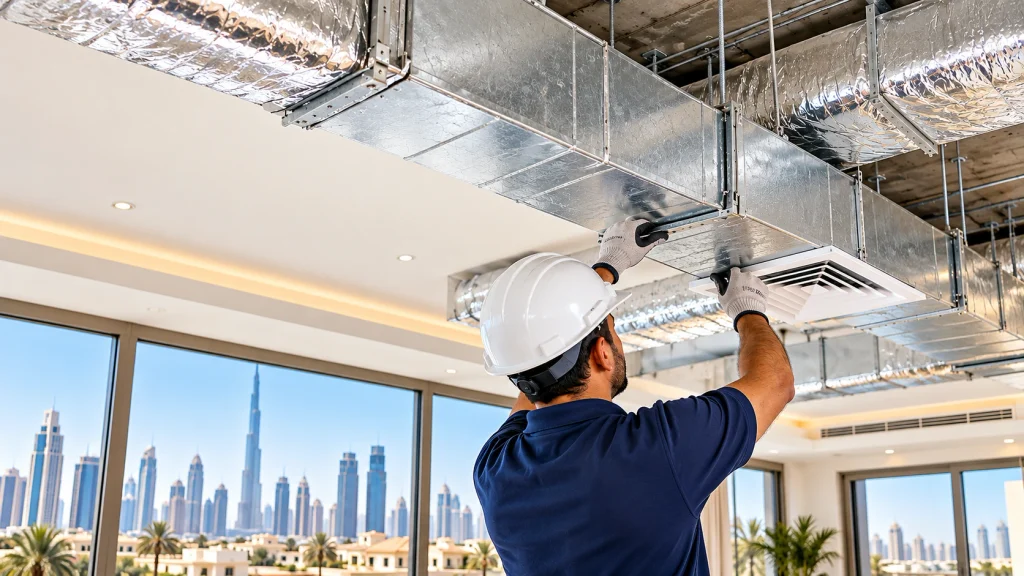
1. Site Inspection and Cooling Assessment
The contractor examines the villa or apartment layout, ceiling space, existing AC equipment, room sizes and possible duct routes.
A larger room with extensive glazing may have different cooling requirements from a shaded bedroom of the same floor area. Simply installing identical ducts everywhere because they “look about right” is not sound HVAC design.
The AC equipment and duct network need to work as one system.
2. Duct Layout and Sizing
The next stage involves determining where supply and return ducts should run and selecting suitable duct dimensions. Oversized or undersized ducts can create airflow problems. Poor routing can also increase resistance, particularly when installers add unnecessary bends or long duct runs.
ASHRAE notes that duct leakage can affect cooling capacity and energy use and highlights good-quality ductwork and post-installation sealing as important measures for improving thermal comfort and delivering ventilation air effectively.
3. Fabrication and Installation
Once the layout is confirmed, technicians fabricate or prepare duct sections and install them through the designated ceiling or service spaces. Common systems may use rigid sheet-metal ducts, pre-insulated duct panels or flexible connections in appropriate locations.
Material selection should depend on the design, operating conditions and applicable project requirements rather than simply choosing whichever material costs least. Connections also need proper support and sealing.
4. Duct Insulation
Insulation is particularly important where cool supply air passes through warmer spaces. Without suitable insulation, heat can transfer into the ductwork before the conditioned air reaches the room. Insulation also helps manage condensation risks when cold duct surfaces encounter warm, humid air.
Dubai Municipality’s Dubai Building Code includes requirements covering building design, sustainability and HVAC-related considerations, so materials and installation methods should follow the requirements applicable to the property and project.
5. Airflow Testing and Balancing
Installation should not end when the ceiling closes. Technicians should check airflow, connections, dampers, diffusers and the overall operation of the system. Air balancing helps distribute the required amount of conditioned air to individual spaces.
This final stage can reveal problems such as weak airflow, excessive noise, leaking joints or rooms receiving disproportionate cooling.
What Types of AC Ducts Are Used in Dubai Homes?
Different duct materials suit different applications.
Galvanised steel ducts provide a rigid and durable air-distribution route and commonly appear in HVAC systems. They can accommodate different layouts but require proper fabrication, joint sealing and external insulation where specified.
Pre-insulated ducts combine the air passage and insulation within a lightweight panel system. Correct fabrication remains essential because weak joints or damaged sections can compromise performance.
Flexible ducts offer useful flexibility for shorter connections between main ductwork and diffusers. However, excessive length, compression, sharp bends or poor support can restrict airflow.
There is no universally “best” duct material for every Dubai home. The correct option depends on the HVAC design, ceiling configuration, airflow requirements, fire-safety requirements and project specifications.
AC Duct Installation During Home Renovation
A major renovation is often the best opportunity to inspect or redesign ductwork as ceilings and service areas may be opened up. If you are planning home renovation services in Dubai, it is best to coordinate the HVAC work before completing gypsum ceilings, lighting layouts , and decorative finishes. Moving a diffuser after a beautiful ceiling has been finished is possible, but nobody enjoys paying twice for the same ceiling.
Kitchen and bathroom alterations are also necessary because of competition for limited ceiling space between extraction, ventilation, plumbing, electrical services, and AC components. A planned approach will ensure the HVAC, electrical, plumbing and interior teams do not interfere with one another.
Does AC Ductwork Need to Follow Dubai Regulations?
HVAC work should comply with the requirements applicable to the specific building and scope of alteration. Dubai Municipality states that the Dubai Building Code establishes minimum requirements covering health, safety, welfare, convenience, environmental impact and sustainable building design.
Fire safety also matters when ducts interact with fire-rated building elements. Dubai Civil Defence guidance states that approved fire dampers are required where air ducts penetrate or terminate at openings in certain fire-resistance-rated walls or partitions.
Approval requirements can differ according to the property, development, building management and extent of modification. Homeowners should therefore confirm applicable permissions before carrying out significant HVAC alterations rather than assuming every internal AC change is automatically exempt.
How Much Does AC Duct Installation Cost in Dubai?
There is no reliable one-price-fits-all figure for AC duct installation in Dubai because ductwork is highly dependent on the property and system design. The quotation can change according to the total duct length, duct material, property size, AC capacity, number of rooms, number of supply and return points, insulation specification, ceiling accessibility, diffuser selection, alteration work and whether existing ducts need removal.
A straightforward duct modification in an accessible apartment will naturally differ from designing a complete duct network for a large villa. For that reason, homeowners should request a site-specific quotation rather than choosing a contractor based only on a per-metre headline price. MAE Technical Services LLC’s quote request page allows property owners to provide their location and project requirements before pricing is confirmed.
What Are the Signs of Poor AC Duct Installation?
Several symptoms can point toward ductwork problems rather than a faulty AC unit. Rooms may cool unevenly, airflow from some vents may feel unusually weak, the system may produce excessive air noise, or cooling may take longer than expected. Damaged insulation can also contribute to condensation around ducts.
High cooling consumption deserves investigation too, although ductwork is only one possible cause. DEWA recommends keeping AC thermostats at 24°C or higher and notes that each one-degree increase in the set point can save up to 5% of AC consumption. It also recommends regular filter cleaning and measures that keep cooled air inside the property.
If sensible thermostat settings still leave major temperature differences between rooms, the duct system deserves attention.
Can New Ductwork Improve Indoor Air Quality?
Properly sealed ductwork can help reduce opportunities for dust and pollutants from surrounding spaces to enter the air-distribution system. ENERGY STAR specifically identifies indoor-air-quality benefits from reducing pollutant entry through duct leaks. However, homeowners should be cautious about exaggerated health claims.
The U.S. Environmental Protection Agency says routine duct cleaning has not been proven to prevent health problems and generally recommends cleaning ducts when specific problems exist, such as substantial visible mould growth, vermin infestation or excessive dust and debris.
In other words, good duct installation matters, but ducts are not magical lungs for your house. Moisture control, filtration, AC maintenance and general indoor hygiene matter too.
How Do You Choose an AC Duct Installation Contractor in Dubai?
Start with technical questions and not just asking for the lowest quotation. A good contractor should inspect the property, understand the existing AC system, explain the proposed duct route and specify materials and insulation in the quotation. Ask how joints will be sealed, how airflow will be balanced and whether the work affects any building or community approvals.
For projects that combine ductwork with new equipment, professional AC installation services in Dubai can help coordinate the AC unit and air-distribution system rather than treating them as unrelated jobs. Price is important and a slightly lower installation bill loses charm quickly if you need to open your ceilings to fix poor airflow.
Common AC Duct Installation Mistakes to Avoid
One common mistake is installation of ducts without assessment of airflow requirements and using excessive flexible ducting and creating unnecessary bends to restrict air movement. Poor joint sealing can waste conditioned air, while insulation deficiencies can lead to unwanted heat gain or even condensation problems.
Homeowners should also avoid completing ceilings before the system has been checked. Access becomes considerably harder once gypsum work, painting and lighting is finished. Finally, do not assume every cooling problem requires a larger AC unit. Sometimes the equipment is capable, the system just isn’t distributing its output effectively.
FAQs
How long does AC duct installation take?
The duration depends on property size, ceiling access, duct complexity and whether the work forms part of a renovation. A site inspection is the best way to establish a realistic schedule.
Can AC ducts be replaced without changing the AC unit?
Yes, in some cases. Existing equipment can remain if it is suitable for the property and compatible with the redesigned duct system. A technician should assess the system first.
Is duct insulation necessary in Dubai?
Insulation is an important part of duct-system design, particularly where cooled air passes through warmer spaces. The exact insulation specification should follow the project design and applicable Dubai requirements.
Why is one room warmer than the others?
Possible causes include duct sizing, leakage, restricted airflow, balancing issues, filters, insulation, room heat gain or AC equipment problems. An inspection helps identify the actual cause.
Should ducts be tested after installation?
Yes. Checking airflow, connections and balancing before closing inaccessible areas can identify installation problems early.
Can AC ducts cause high electricity consumption?
Leaking or poorly insulated ducts can contribute to energy losses, but high consumption can also result from equipment condition, thermostat settings, building insulation, dirty filters and other factors.
Do I need approval to modify AC ducts in Dubai?
It depends on the building, development and extent of the alteration. Significant modifications may require building management, developer or relevant authority approval. Confirm the requirements before starting work.
Plan Your AC Duct Installation Properly
Good AC duct installation in Dubai is mostly invisible when it works properly. You should simply notice comfortable rooms, balanced airflow and an AC system that does its job without unnecessary struggle. That result starts with correct planning, duct sizing, routing, insulation, sealing and testing.
If you are installing a new ducted AC system, renovating a villa or correcting airflow problems in an existing property, MAE Technical Services LLC can inspect the site and recommend a practical solution based on the property and project requirements.
Contact the team to request a quote or arrange a site inspection before starting your AC or renovation work in Dubai.